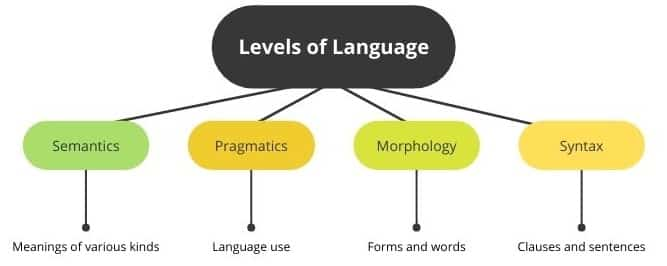
There is more to English Language than the current GCSE, but is the qualification giving students the opportunity to see this themselves?
I did not enjoy English Language at GCSE. I was the first year of the grade 9-1 examinations, and I found English Language uninteresting. As a student, it felt restrictive; lessons were based around "how does the writer use language to ", or even worse, "how is the text structured to interest you as a reader?" Most of the time, it did not!
However, when I went to a Sixth Form Open Evening, my opinion of English Language changed drastically. It felt more like, well, English Language. I got to learn about the history of the English Language (my personal favourite aspect of the A-Level), how children acquire language, theories of language, and much more. I even enjoyed the grammar aspect, which I guess explains why, several years later, I completed my Master's exploring approaches to grammar teaching.
Having experienced a more enriching study of English Language at A-Level, going back to teaching the subject at GCSE felt quite disorientating. In my Key Stage Four classes, students were engaged with English Literature, but not with English Language. English Literature felt exploratory, whereas English Language, despite my best attempts, felt tightly structured around preparing students to get the marks in their examinations. Whilst this is important, isn't it as equally important that we show topics of linguistic are worthy of study?
Such discussions shaped what was an incredibly enriching day at Aston University recently, at AQA's "Rethinking Language Conference." The purpose of this conference was to encourage all to recognise how knowledge about language, rather than being at the periphery of English, was at the centre of our discipline and so, knowledge of this should be as equally important as the knowledge of literature we share with our students.
The day began with an introduction from Steph Keenan, Head of Product (English) at AQA and Professor Marcello Giovanelli of Aston University. Both highlighted the need for students to have greater agency in the world, and this can be achieved through knowing how language can be used, misused, changed or maintained. It was pointed out that the Curriculum Review of 2025 recommended significant changes to the teaching of English Language; as Keenan and Giovanelli said, we should work towards reclaiming English Language.
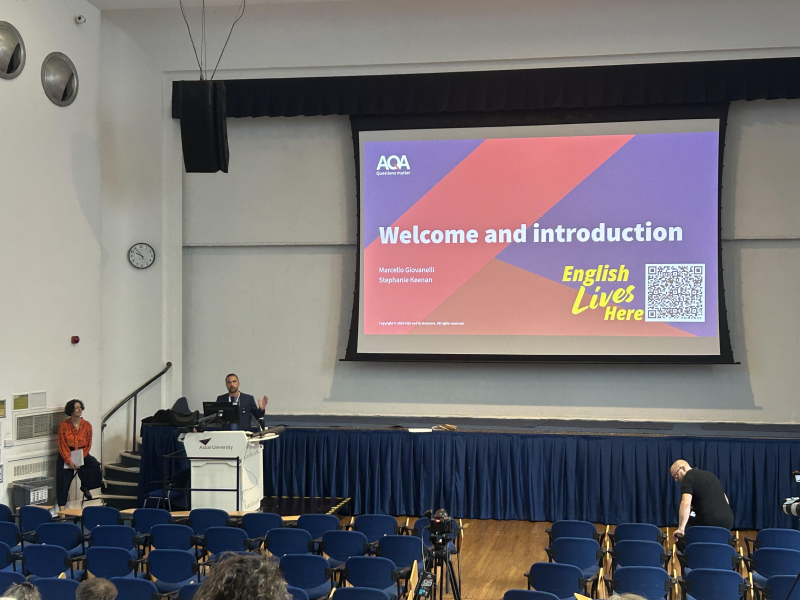
After Keenan and Giovanelli, a key note was delivered by Rob Drummond, Professor of Sociolinguistics at Manchester Metropolitan University and somebody I had learnt about at A-Level. He focused on 'The Future of English Language: Why it Matters More Than Ever', arguing that if everybody knew a bit more about language and language use, the world would be a slightly better place (emphasis his own.) His argument focused on three core ideas:
1. Spoken Language is inextricably linked to identity. Language use gives an individual agency and the ability to negotiate their place in the world. In fact, "language" should not be treated as a noun, but as a verb.
2. Language standards reflect social choices, not linguistic facts. Although beliefs about "superior" forms of language are deeply entrenched in society, that does not mean that we should not challenge this.
3. Linguistic prejudice is real. We must be aware that language can, and is, unfortunately, used as a proxy for other areas of bias and discrimination.
He concluded his key note by encouraging us all to be linguistically curious, to take pride in being a language specialist, and to develop a critical awareness about language and language use.
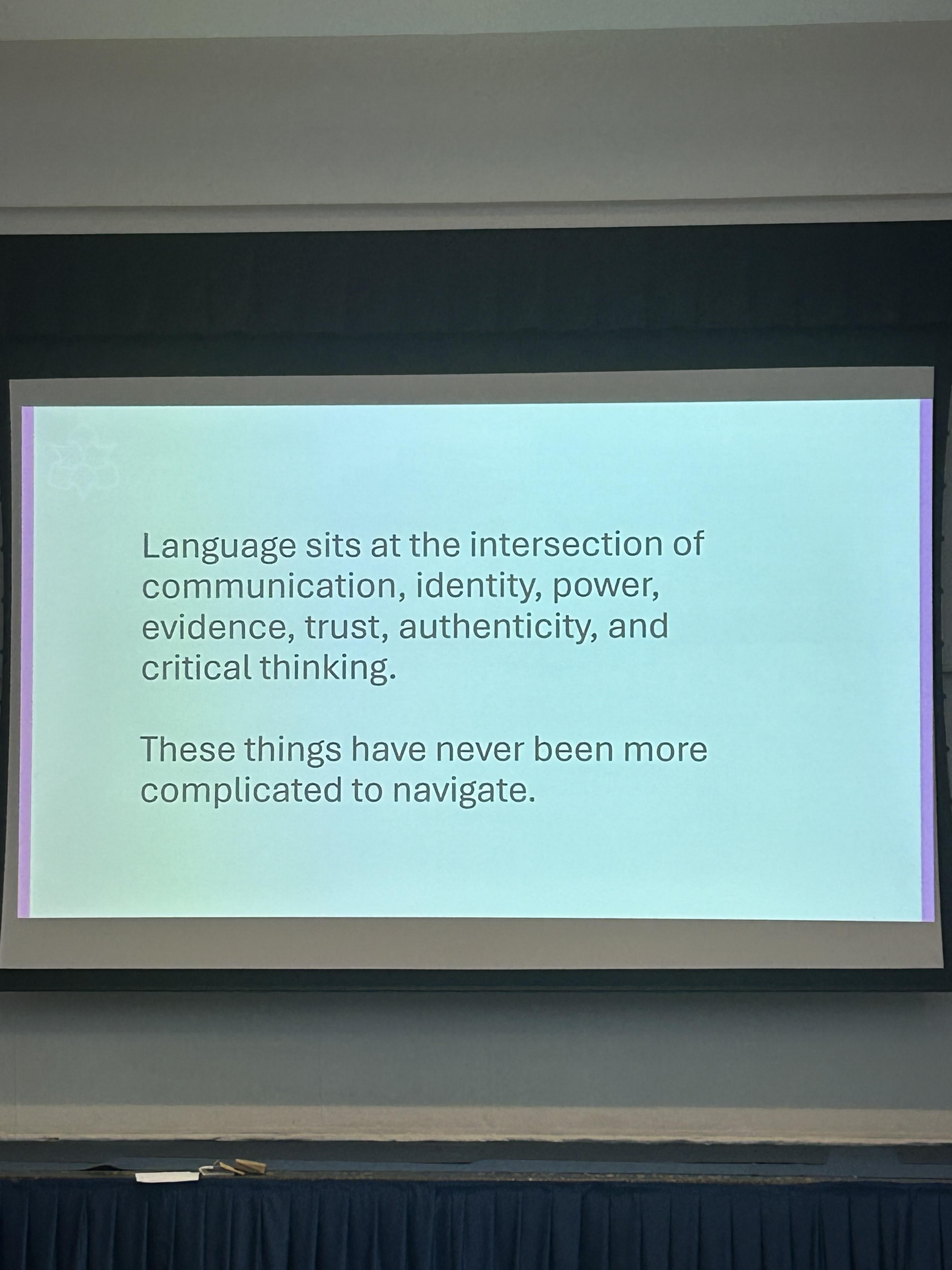
I found this quotation Drummond referred to particularly thought-provoking.
The rest of the day was then split into different sessions which we could attend. Particular highlights of the sessions I went to were:
Holly Wimbush and Zara Shah:
In their session 'Why Linguistic Matters: Powerful Knowledge for Every English Classroom', Wimbush and Shah emphasised the importance of language analysis in the classroom, highlighting its necessity in getting students to both read critically and write accurately. What I particularly liked was the metaphor Shah used of language being a tapestry, with grammar (which the session paid particular attention to) being the golden thread that holds the tapestry together. Showcasing how their students in Key Stage Three began with noun phrases and how this lead into discussions relating to how linguistics assigns roles to students was incredibly empowering, particularly as Wimbush and Shah then mapped out how this work in Key Stage Three lead to some linguistically rich and thoughtful work in Key Stages Four and Five.
Michlyn Caffrey
In her session 'Fluency First: Building Sentence Level Mastery for a Smooth Year Six to Year Seven Transition', Caffrey drew our attention to the barriers students might face when asked to write. She spoke about how writing was 'the cognitive equivalent of digging ditches' (Kellogg, 1994), and how automising the micro could make the macro less cognitively burdensome for our students. But in order to this, we ourselves need to make sure we know how to define certain things we want our students to do; for example, when asked to define a "sentence", an array of answers were shown. Whereas I thought of terms such as 'subject, verb, single or multi-clausal, modification and tense', responses from students ranged from "what X asks me to write" or "I don't know". A shared understanding of what is meant, Caffrey concluded, can ensure that hard thinking and sentence sophistication can exist in the classroom.
Andrew McCallum, Anthony Cockerill, Sally Latham, Chris Curtis
The final session I attended was a panel discussion relating to 'Media Literacy in English Language'. The above panellists discussed the need for clarity regarding what 'media literacy' means, how young people can contribute to media literacy themselves, and how this should not become something for solely the English Department to take responsibility for; rather, it would need to be viewed as something which we are all responsible for.
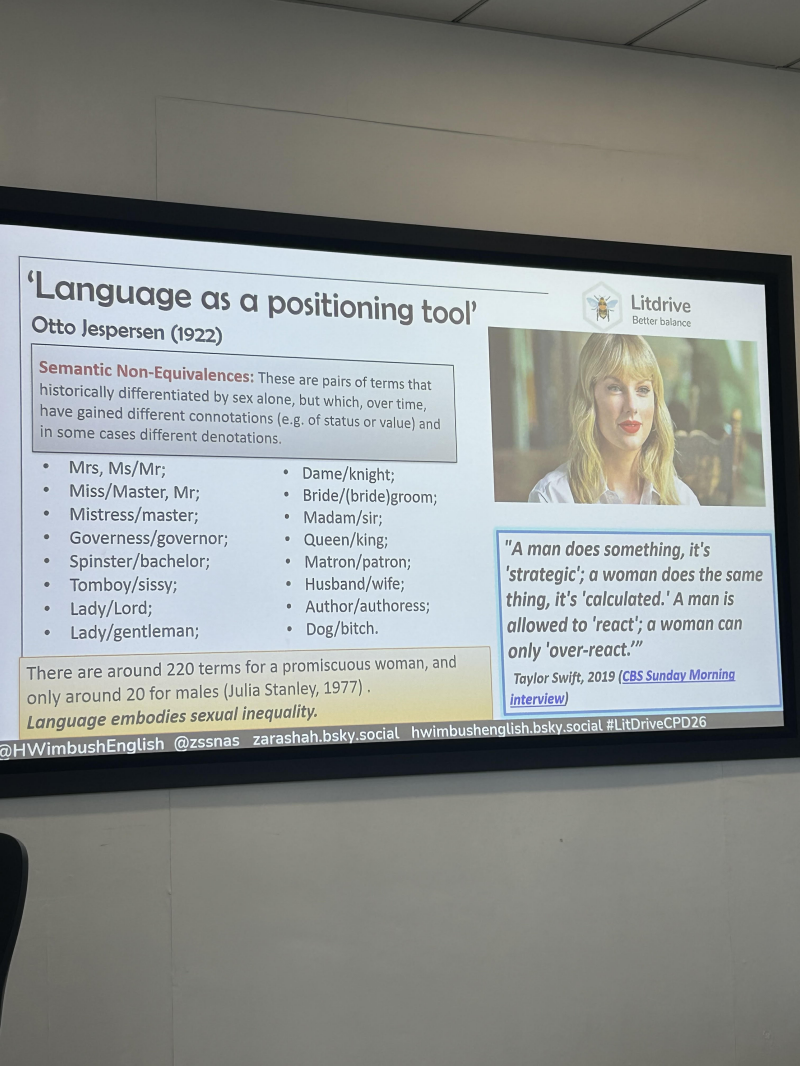
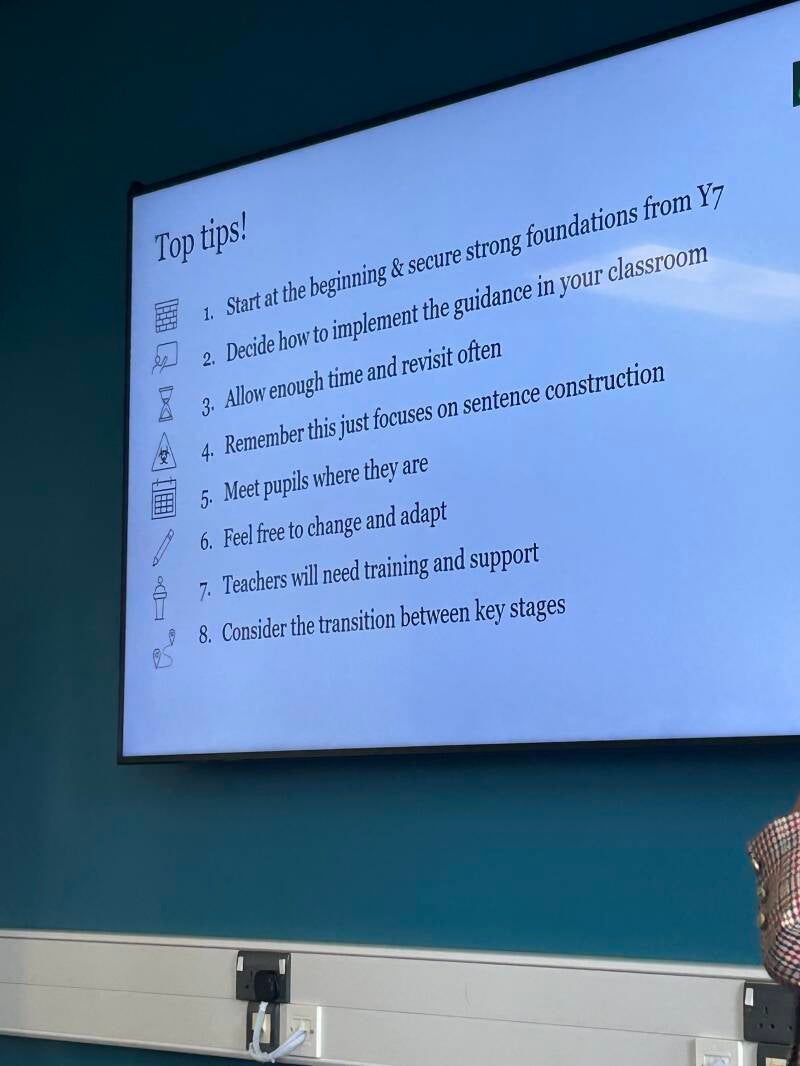
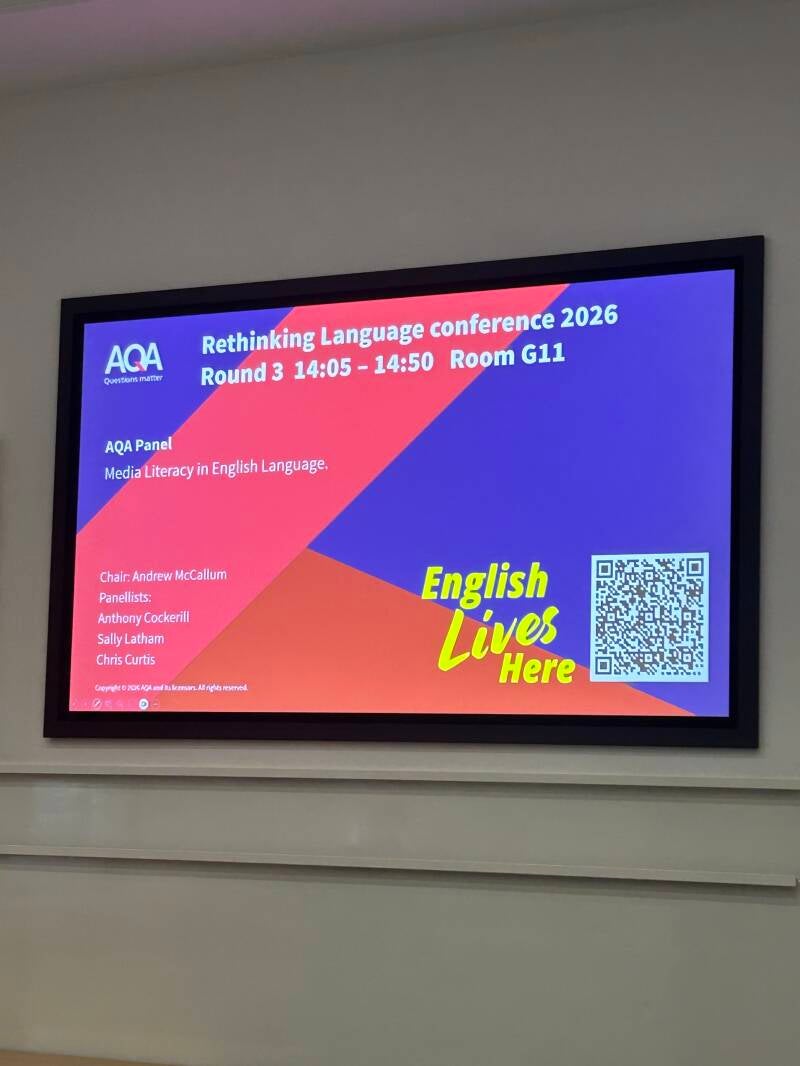
Snapshots from the day.
What this day left me with was a re-ignited enthusiasm for English Language. Seeing other teachers talk so enthusiastically about English Language, and showcasing just how important of a discipline it is helps students to see that this subject does belong, and in fact belongs across all curricula.
As we wait to see what changes are made to the English Language curriculum in the future, what I hope to see is:
1. An awareness of the parts that make up language, but embedded within the context of making meaning.
2. An appreciation and recognition of the different types of language used in society.
3. The 'What is English?' question clearly showing more than the act of reading, talking and writing about literary texts.
Add comment
Comments