A new collection of poems, introduced in 2023.
Over the years, there has been a sustained effort to diversify the English curriculum and the texts that are offered as part of this. Whilst it would be disingenuous to exclude writers such as Dickens, Blake and Austen (and their undoubtable influence on subsequent writers), the very essence of studying English Literature is how literary texts are a reflection of what it means to be human and the universal themes which we can relate to as individuals. It is imperative, therefore, that we teachers ensure that our pupils have the chance to see themselves represented in the texts we teach and engage with voices that transcend beyond the voice purported by the ‘Literary Canon’.
As my teaching career began, back in 2023, I learnt that my Year Tens – my first GCSE group – would be studying ‘Worlds and Lives’, a cluster distinct from both ‘Love and Relationships’ (which I had studied myself at GCSE) and ‘Power and Conflict’ (which I taught during my final placement of my PGDipEd.) What makes this cluster different is that two thirds of the poems were published post-2000. Of course, poets such as Wordsworth and Shelley feature, but they are accompanied by poets whose work explores ideas and experiences that many pupils may find more accessible: Raman Mundair, Grace Nichols, Caleb Femi and, most significantly for my students in the West Midlands, Liz Berry.
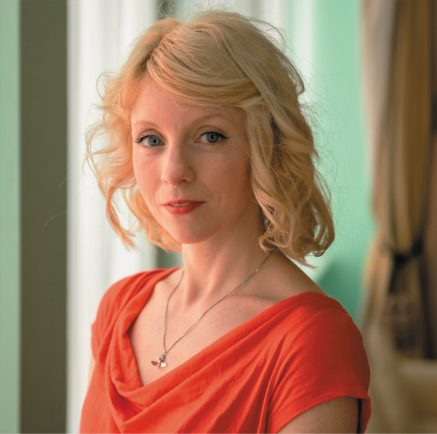
Liz Berry; image taken from https://bromsgrovestandard.co.uk/news/top-midlands-poet-recite-rhymes-bromsgroves-artrix/
Initially, I was apprehensive about starting work on a new anthology of poetry. Being in its first year, there were fewer resources available to support myself (and the other teachers in the Department) as we transitioned away from 'Power and Conflict', which had been taught since 2015 ahead of the first 9 - 1 examinations. It also meant learning fifteen new poems for myself, and then supporting my Year Tens, who were also, understandably, dubious about these poems. Where was Ozymandias, the self-proclaimed 'king of kings' that an older sibling had beautifully annotated? What about Owen's Exposure, where we are told numerous times that 'nothing happens'?
Tentatively, I chose Liz Berry's 'Homing' as the first poem my Year Tens and I would look at in class. The poem, which explores how language and dialect shape our sense of belonging and identity, felt like a good place to begin. It seemed like a poem my Year Tens would be able to relate to and if not, it would help lay the foundations for approaching the rest of the anthology.
To my surprise, the lessons that followed were a whirlwind of thoughtful discussion and ideas. Our class discussions about prejudices towards our own West Midlands accents, but also our pride of this, offered pupils a rare and perfect entry point into Berry’s poem. We discussed how Berry’s dialectal words, ‘saft’, ‘blart’, ‘jemmied’ and ‘wum’, were used alongside the elocuted ‘how now brown cow’ to create a clear sense of identity; the speaker, it seemed, was fascinated by the richness of and the sounds of the West Midlands dialect, hence her desire to ‘forge your voice / in my mouth.’ In doing so, pupils argued that Berry presented a direct challenge to linguistic prejudice; moreover, the poem suggests that the pupils’ accents and dialects are worthy of serious literary study. Maybe, I thought, this anthology will be more rewarding for the students than 'Power and Conflict'.
The following year, as part of an enrichment week towards the end of the academic year, pupils in Year Eight were taken to the Black Country Living Museum. After spending the morning exploring the streets, mines and (most importantly) the sweetshop, Berry’s ‘Homing’ was read aloud to them. Being surrounded by the sights and sounds Berry refers to allowed pupils to connect the history of the region, and the world of the poem, to their own lived experiences. For many of the pupils at this school, who come from disadvantaged backgrounds, having this opportunity to immerse themselves in the poem helped them to see their accent and dialect as an affirmation of self-worth, rather than something which needs to be corrected and hidden out of fear.
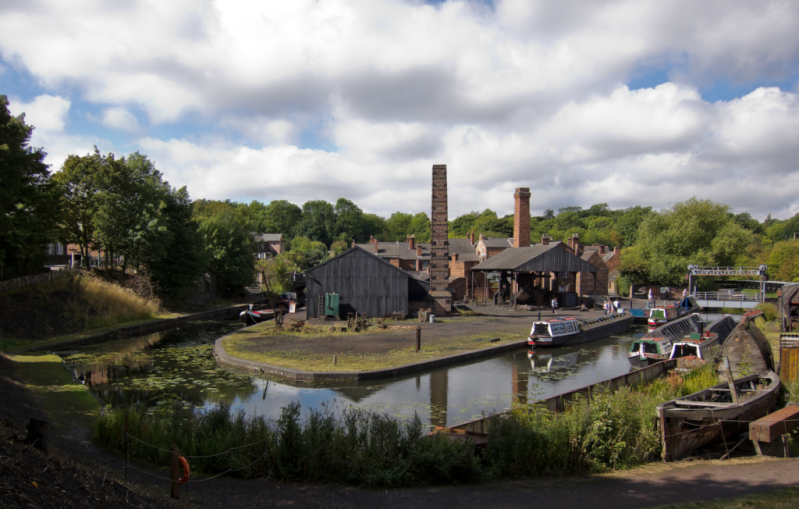
The Black Country Living Museum.
But the real strength of this poetry anthology comes from the way in which the poems communicate with one another. Whereas previously, pupils made tenuous links between poems through poetic devices, the ‘Worlds and Lives’ Anthology invited pupils to make thematic links much more successfully. Ideas of identity being removed by somebody forcefully in ‘Homing’ were connected to the displacement of the pot in Shamshad Khan’s poem of the same name. Likewise, Raman Mundair’s ‘Name Journeys’ reflects on her Indian identity becoming ‘dislodged as milk teeth fall / and hit infertile English soil.’ Suddenly, poetry became more than enjambment, imagery, and the regularity or irregularity of rhyme. Whilst such terminology provides pupils with the language to analyse how poets construct meaning, the thematic richness of these poems encouraged pupils to see how poetry from across our literary history can form a conversation, drawing on the diverse range of voices and experiences. Comparison, as a result, became less of a necessity, and more of an instinct.
Since teaching this cluster of poems, my Year Tens now find themselves preparing for Year Thirteen. I myself have moved on, and whilst my new school does not teach this anthology, the poems I spent two and a half years reading, thinking and talking about remain not only present in my mind, but also incredibly important, given the circumstances our young people face today. Talks of the worsening of climate change draw me back to the ‘lone wave of rubbish’ Grace Nichols gloomily observes in ‘Like an Heiress’ and George Eliot’s realisation that the sky is ‘yellowed by the smoke’ in ‘In a London Drawing Room’. Current political uncertainty across the world speaks to Percy Bysshe Shelley’s ‘England in 1819’, with rulers who ‘leechlike to their fainting country cling / Til they drop’. These poems go far beyond being a GCSE anthology to be annotated aesthetically and then forgotten to time. They give pupils a way in to discussing issues which will directly impact their lives for years, if not decades, to come. Even today, as I now prepare to enter another year of teaching, I find relevance in Raymond Antrobus’s ‘With Birds You’re Never Lonely’ when talking to a pupil about the importance of getting outside to support your wellbeing, and in Caleb Femi’s ‘Thirteen’, when inviting pupils to reflect on the influences that shape their lives as they grow up.


Left: Just some of the political headlines which have made the front pages in recent years. Right: An illustration of the 'lone wave of rubbish' in 'Like an Heiress'.
Ultimately, what made ‘Worlds and Lives’ the rewarding experience I found it to be was its ability to help pupils go beyond the page. These poems showed pupils what we can learn about not just the lives of others, but the lives of ourselves and the consequences of our actions. It allowed their voices to be heard and, for some, perhaps for the first time, demonstrated that voices and experiences like their own were worthy of being represented and studied.
Add comment
Comments